

Foreign residents can book a hospital appointment in Japan mainly through three methods: by phone, online, or directly at the reception desk of a medical institution. In Japan, patients usually choose a medical department according to their symptoms, such as internal medicine, dermatology, otolaryngology, orthopedics, or dentistry, so selecting the right medical institution is important. Some hospitals and clinics accept walk-in patients, but first-time visits often involve long waiting times, and advance confirmation is especially important when foreign language support or interpretation is needed. This article explains how foreign residents living in Japan can book medical appointments, what to say on the phone, how to use online booking systems, what to bring on the day of the visit, and what to keep in mind during emergencies.
- 1. Basic Points Foreign Residents Should Know Before Booking a Hospital Appointment in Japan
- 1.1. In Japan, patients usually choose a medical department based on their symptoms
- 1.2. Hospitals with foreign language support can be found through public search websites
- 1.3. Medical costs differ depending on insured treatment and self-funded treatment
- 1.4. First-time patients should confirm whether an appointment is required
- 2. How to Book a Hospital Appointment by Phone, Online, or at the Reception Desk
- 3. What to Bring on the Day of Your Visit and Important Precautions
- 3.1. Bring identification documents and documents showing your health insurance eligibility
- 3.2. Prepare information about medicines, allergies, and past illnesses
- 3.3. Arrive early and complete reception procedures before your appointment time
- 3.4. In emergencies, use 119 or emergency consultation services instead of waiting for a regular appointment
- 3.5. Prepare useful Japanese phrases for hospital appointments
- 4. For Reservation Systems, Choose “RESERVA”
- 5. Summary
Basic Points Foreign Residents Should Know Before Booking a Hospital Appointment in Japan
This section explains the first points foreign residents should check when looking for a hospital or clinic in Japan. Understanding the appropriate medical department for your symptoms, whether foreign language support is available, and the difference between insured treatment and self-funded treatment can help reduce anxiety when making an appointment.
In Japan, patients usually choose a medical department based on their symptoms
At medical institutions in Japan, patients generally choose a department according to the type of health problem they have. Symptoms such as fever, stomach pain, headache, and cough are usually handled by internal medicine, while rashes or itching are handled by dermatology, runny nose or sore throat by otolaryngology, and injuries or joint pain by orthopedics. If you are unsure which department to choose, consulting a nearby internal medicine clinic, a local medical consultation service, or an emergency consultation hotline can help you decide where to go. If your symptoms are severe, you should not wait for a regular appointment and should consider visiting an emergency department or calling 119.
Hospitals with foreign language support can be found through public search websites
If you are not confident communicating in Japanese, it is important to confirm whether the hospital or clinic offers foreign language support before booking. The Medical Information Net, operated by the Ministry of Health, Labour and Welfare and prefectural governments, allows users to search for medical institutions by area, department, consultation day, and available foreign language support. For tourists or short-term visitors, medical institution search services provided by the Japan National Tourism Organization and consultation counters run by local governments may also be useful. Even if search results show English support, the service may be limited to certain days or hours, so it is safer to confirm when booking by asking, “English available?” or “Is interpretation available?”
Medical costs differ depending on insured treatment and self-funded treatment
Foreign residents enrolled in Japan’s public health insurance system generally pay only a portion of the medical cost at the reception desk when receiving treatment covered by insurance. The documents required at the reception desk differ depending on the insurance system, such as employees’ health insurance, National Health Insurance, or the Medical Care System for the Older Senior Citizens. Short-term visitors and travelers who are not enrolled in Japan’s public health insurance system often need to pay the full medical cost themselves, and consultation, examination, and medication fees can become expensive. If you plan to use overseas travel insurance or private medical insurance, contact your insurance company before booking to confirm partner hospitals, required documents, and payment procedures.
First-time patients should confirm whether an appointment is required
Hospitals and clinics in Japan generally operate under one of three systems: appointment-only, appointment-priority, or first-come-first-served reception. At appointment-only medical institutions, you may not be able to see a doctor if you visit without a reservation. At appointment-priority institutions, walk-in patients may be accepted, but patients with reservations are usually seen first, which can lead to long waiting times. Even at medical institutions that accept patients in order of arrival, fever outpatient services, vaccinations, health checkups, and specialist outpatient services may require advance booking, so checking the official website or calling before visiting is recommended.
How to Book a Hospital Appointment by Phone, Online, or at the Reception Desk

This section explains the specific steps foreign residents can take when booking a hospital appointment in Japan. By understanding the differences between phone reservations, online booking, and reception desk reservations, you can choose the method that best suits your Japanese ability and your symptoms.
When booking by phone, briefly explain your name, symptoms, and preferred date
When making a phone reservation, first say that you would like to make an appointment, then give your name, explain whether it is your first visit or a follow-up visit, describe your symptoms, and state your preferred date and time. If you are not confident speaking Japanese, ask the staff to speak slowly, and if necessary, have a family member, friend, or workplace representative assist you during the call. The hospital may ask for your date of birth, phone number, whether you have health insurance, whether you have a fever, and what time you can come to the hospital. At the end of the call, repeat the appointment date, reception time, required items, and hospital location to avoid misunderstandings.
Useful Japanese phrases for phone reservations include “Hajimete jushin shimasu” meaning “This is my first visit,” “Eigo de taio dekimasu ka” meaning “Can you provide support in English?”, “〇-gatsu 〇-nichi no gozen ni yoyaku dekimasu ka” meaning “Can I book an appointment on the morning of 〇?”, “Kenko hoken ni kanyu shiteimasu” meaning “I have health insurance,” “Hatsunetsu ga arimasu” meaning “I have a fever,” and “Tsuyakusha to issho ni itte mo yoi desu ka” meaning “May I come with an interpreter?” You do not need to use difficult medical terms when explaining symptoms. Simply explaining when the symptom started, where you feel pain or discomfort, whether you have a fever, and whether you are taking medication helps the hospital decide the appropriate appointment slot and consultation method. If you have sudden severe pain, breathing difficulty, or unclear consciousness, prioritize emergency care instead of making a regular phone reservation.
When booking online, carefully check the entered information and reception time
Online booking is a convenient option for foreign residents who are not confident speaking Japanese. Through a hospital’s official website or dedicated reservation page, you can enter the department, doctor, preferred date and time, name, date of birth, phone number, email address, and symptoms. Some hospitals send a confirmation email or reservation number after online booking, so you should keep it until the day of your visit. If the input form is available only in Japanese, you can use translation tools, but mistakes in your name, date, or phone number may require extra confirmation at reception, so careful checking is important.
The time shown in an online booking system may refer to the reception time or estimated arrival time rather than the exact time the consultation begins. For example, even if your appointment is at 10:00, the actual consultation may be delayed depending on previous patients or necessary examinations. If you have a fever, suspected infectious disease, pregnancy-related concerns, a child’s appointment, or a specialist outpatient appointment requiring a referral letter, the hospital may call you after online booking to confirm details. Do not rely only on the booking completion screen; also check the precautions, cancellation method, rules for late arrival, and payment method.
Reception desk reservations are often used for follow-up visits and examinations
Booking directly at the hospital reception desk is often used for follow-up visits, examinations, vaccinations, health checkups, or appointments based on a referral letter. If the doctor asks you to return for another visit after the consultation, the next appointment is usually arranged at the reception desk before or after payment. In many cases, the next appointment date and time are printed on an appointment slip or patient registration card, so you should keep the documents carefully. If you have difficulty understanding the Japanese explanation, pointing to the appointment slip and asking, “Should I come on this day?” can help prevent mistakes in the date or time.
Comparison of hospital appointment methods
| Appointment method | Suitable for | What to check |
| Phone reservation | People who want to explain symptoms directly or need a relatively urgent appointment | Appointment date and time, required items, foreign language support, entrance for patients with fever |
| Online booking | People who are not confident speaking Japanese or want to book outside office hours | Confirmation email, reception time, cancellation method, entered information |
| Reception desk reservation | Follow-up visits, examinations, health checkups, and patients with referral letters | Appointment slip, patient registration card, next visit time, precautions before examination |
Phone reservations, online booking, and reception desk reservations each have different advantages. Phone reservations allow you to consult directly about symptoms and requests, but preparation is necessary if you are not confident speaking Japanese. Online booking is convenient because it can be completed at any time, but if the entered information is incorrect, extra confirmation may be needed at reception. Reception desk reservations are reliable because you can confirm details face to face with hospital staff, but this method requires you to visit the hospital first and may not be suitable for first-time visits or sudden symptoms.
What to Bring on the Day of Your Visit and Important Precautions
This section explains what foreign residents should bring to a hospital in Japan and what they should keep in mind on the day of the visit. Preparing for the full process from reception and consultation to payment and receiving medicine can make the visit smoother.
Bring identification documents and documents showing your health insurance eligibility
When visiting a medical institution in Japan, you should bring your residence card, passport, My Number health insurance card, eligibility confirmation document, patient registration card, referral letter, and medication notebook if applicable. People enrolled in public health insurance need to show documents confirming their insurance eligibility at the reception desk. New issuance of the traditional health insurance card has been discontinued, and the basic procedure now involves presenting a My Number health insurance card or an eligibility confirmation document. Some hospitals use reception machines or card readers with facial recognition, so if you do not know how to operate them, ask the reception staff to show you how to use them.
Prepare information about medicines, allergies, and past illnesses
During the consultation, the doctor may ask about medicines you are currently taking, past illnesses, surgery history, allergies, and the possibility of pregnancy. If you do not know the Japanese names of your medicines, bringing the medicine box, instruction leaflet, photos, or a screen showing the ingredient names can help doctors and pharmacists confirm the details. If you have allergies, explain the cause and symptoms clearly, such as food, medicine, metal, or latex. If it is difficult to explain in Japanese, preparing a note written in both your native language and Japanese and showing it at reception or in the consultation room is an effective method.
Arrive early and complete reception procedures before your appointment time
For first-time visits, filling out a medical questionnaire, confirming identity, checking insurance eligibility, and issuing a patient registration card can take time, so arriving 10 to 20 minutes before the appointment is safer. At large hospitals, you may need to move from the main reception desk to the department reception desk, and blood tests, imaging examinations, payment, and receiving medicine may take additional time. If you are likely to be late, call the hospital as soon as you know and confirm whether you can still be seen or need to reschedule. Repeated no-shows can make it harder to book future appointments, so if you cannot visit, always contact the hospital in advance.
In emergencies, use 119 or emergency consultation services instead of waiting for a regular appointment
If you have severe chest pain, difficulty breathing, loss of consciousness, severe headache, convulsions, heavy bleeding, serious burns, or sudden paralysis, you should call 119 instead of booking a regular hospital appointment. In Japan, 119 is the emergency number for ambulances and fire services, and in some areas, three-way interpretation through a telephone interpretation center is available when foreign language support is needed. If you are unsure whether to call an ambulance, some areas provide the “#7119” emergency consultation service, and children’s symptoms can be discussed through “#8000.” Waiting for a regular appointment when symptoms are urgent can be dangerous, so when in doubt, use local government or fire department consultation services.
Prepare useful Japanese phrases for hospital appointments
When foreign residents book a hospital appointment in Japan, preparing short Japanese phrases can make the process smoother. Common phrases used at reception or on the phone include “Yoyaku o shitai desu” meaning “I would like to make an appointment,” “Hajimete desu” meaning “This is my first visit,” “Hoken ga arimasu” meaning “I have insurance,” “Eigo de hanaseru hito wa imasu ka” meaning “Is there someone who can speak English?”, “Tsuyaku apuri o tsukatte mo yoi desu ka” meaning “May I use a translation app?”, “Netsu ga arimasu” meaning “I have a fever,” and “Kusuri o nondeimasu” meaning “I am taking medicine.” When explaining symptoms, it is helpful to describe when they started, where the problem is, how severe it is, and what happened before the symptoms appeared. Even if you are not confident speaking Japanese, showing notes, a translation app, photos of medicine, and the booking confirmation screen can help you communicate necessary information accurately.
For Reservation Systems, Choose “RESERVA”
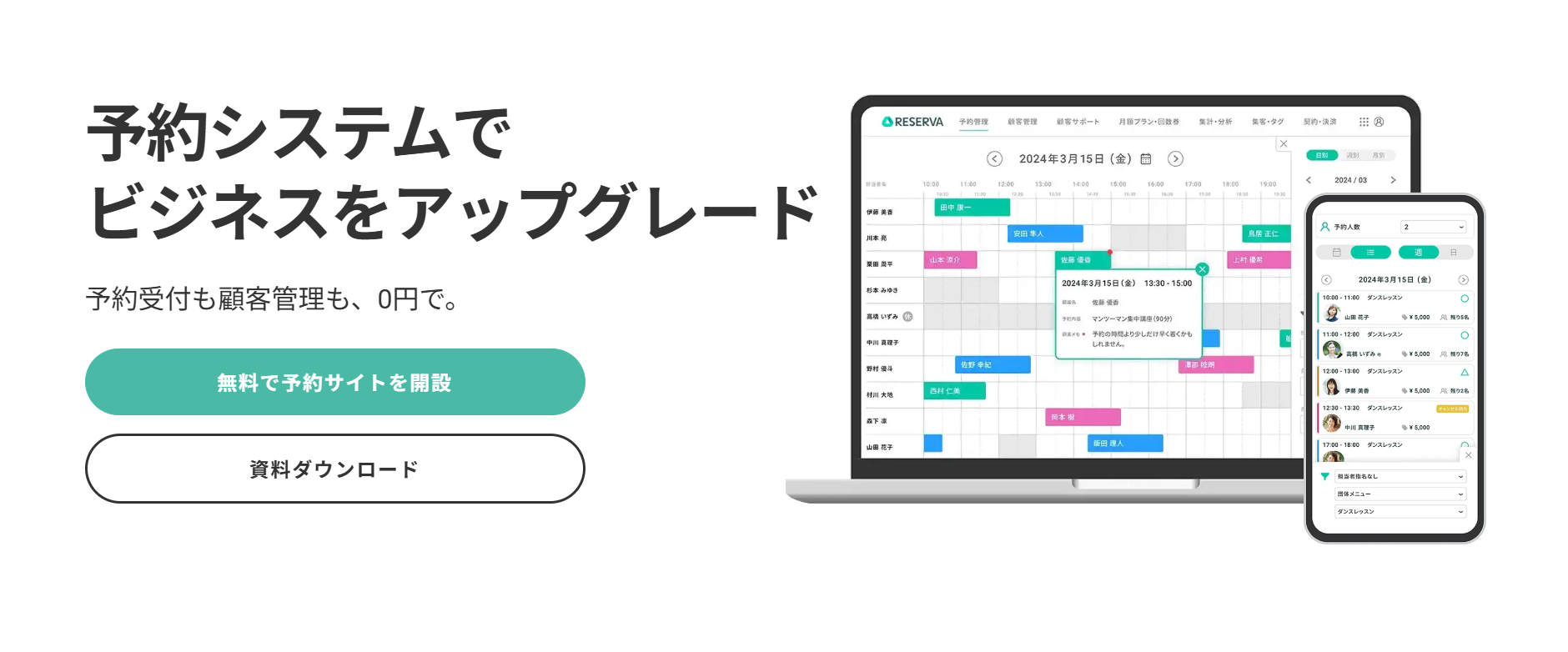
For appointment management at hospitals and clinics, RESERVA, a cloud-based reservation management system with 350,000 companies using the service, is an excellent option. RESERVA is one of Japan’s leading reservation systems and can be used across a wide range of industries and business types, with adoption in more than 350 types of businesses. From account creation to completion of a reservation website, setup can be completed in as little as 3 minutes, and a permanently free plan is also available. This makes RESERVA suitable for businesses that want to reduce initial costs or test usability before full-scale implementation.

Summary
Foreign residents can book hospital appointments in Japan through three main methods: phone reservations, online booking, and reception desk reservations. Choosing the right medical department according to your symptoms and confirming foreign language support, documents proving health insurance eligibility, and items to bring on the day of the visit can make the process from reception to consultation smoother. If you are not confident speaking Japanese, use the Medical Information Net, local government consultation counters, translation apps, or interpreter support, and prepare notes about your symptoms and medicines in advance. If symptoms are urgent, do not wait for a regular appointment; use 119 or emergency consultation services and prioritize safety.
For medical institutions, creating an environment where foreign patients can book appointments with confidence is also important. Online booking, confirmation emails, multilingual precautions, explanations of required items, and clearly stated cancellation procedures allow patients to prepare properly before visiting. By using a reservation system instead of relying only on phone support, medical institutions can standardize reception operations, reduce staff workload, and improve patient convenience. For foreign residents to receive appropriate medical care in Japan, both patient preparation and a clear reservation process provided by medical institutions are essential.